
"400 tons coffee beans"
600 article(s) found

Introduction to the price and flavor and taste characteristics of Yunnan raw coffee beans in 2016
Hu Lu, vice president of the provincial coffee industry association, said that although the output of this harvest season was lower than expected and the market was relatively depressed, the prospect of Yunnan coffee was still promising. Judging from the current public information, both Pu'er and Lincang plan to stabilize the coffee planting area at about 1 million mu. According to this calculation, the coffee planting area of the whole province will reach 2.8 million mu by 2020.

Introduction to the planting environment of Rwanda boutique coffee bean flavor manor with excellent evenness
Rwanda has tin, tungsten, niobium, tantalum, Beryl, gold and so on. The storage of tin is about 100000 tons. Peat reserves are estimated at 30 million tons. Lake Kivu has natural gas reserves of about 60 billion cubic meters. The Niagabango tungsten deposit is the largest tungsten mine in Africa. The forest covers an area of about 620000 hectares, accounting for 29 per cent of the national area, and is one of the important natural resources of Rwanda. [3] Plant Luwang

Costa Rica Yellow Honey Coffee Bean Flavor Description Grind Scale Variety Taste Treatment Introduction
Coffee was introduced to Costa Rica from Cuba in 1729, and today its coffee industry is one of the most well-organized in the world, producing up to 1700 kilograms per hectare. Costa Rica has 400 million coffee trees among a population of 3.5 million, and coffee accounts for 25 percent of the country's exports

Introduction to the characteristics of Costa Rican Saint Roman Coffee Flavor Manor with attractive fragrance
Costa Rica is located in the Central American isthmus, belonging to North America, 10 north latitude, 84 west longitude. It is bordered by the Caribbean Sea to the east and the North Pacific Ocean to the west, with a coastline of 1290 km (212km on the east coast and 1016 km on the west coast). Costa Rica borders Nicaragua in the north (309 km long border) and Panama (639 km long border) south-southeast. Total

Costa Rica Yellow Honey Coffee Bean Flavor Description Taste Quality Characteristics Grinding Scale Introduction
Costa Rica Yellow Honey Coffee Bean Flavor Description Taste Quality Characteristics Grinding Scale Introduction Costa Rica is located in the Isthmus of Central America, belonging to North America, 10 N, 84 W. It is bordered by the Caribbean Sea to the east and the North Pacific Ocean to the west, with a coastline of 1290 kilometers (212 kilometers in the Caribbean Sea to the east and 1016 kilometers in the Pacific Ocean to the west). Costa Rica borders Nicaragua in the north (border length 3

A brief introduction to the cultivation of fruit-scented Costa Rican boutique coffee beans, geographical location, climate and altitude
Coffee was introduced into Costa Rica from Cuba in 1729. Today, its coffee industry is one of the well-organized industries in the world, with a yield of 1700 kg per hectare. Costa Rica has only 3.5 million people but 400m coffee trees, and coffee exports account for 25 per cent of the country's total exports. The volcanic soil of Costa Rica is very fertile and well drained, especially in the central part.

A brief introduction to the treatment method of grinding degree and baking degree of fragrant and mellow Vietnamese fine coffee beans
Vietnam Coffee Corporation (VINACAFE) is a 100% state-owned enterprise with 73 companies and farmers under its jurisdiction.

A brief introduction to the cultivation of medium-grained Vietnamese boutique coffee beans, geographical location, climate and altitude
In the field of coffee processing, there have been some dilapidated processing plants since 1975, and there are several processing plants in northern Tongjiao, Fukui and other places, whose equipment was made in East Germany from 1960 to 1962. In the south, the old factories left by former landowners such as ROSSI,DELPHANTE are also small. While expanding the planting area of coffee, it also began to build new coffee processing plants, initially producing some

Costa Rican coffee flavor and taste introduction to boutique coffee beans in manor production area
Costa Rica is located in the Central American isthmus, belonging to North America, 10 north latitude, 84 west longitude. It is bordered by the Caribbean Sea to the east and the North Pacific Ocean to the west, with a coastline of 1290 km (212km on the east coast and 1016 km on the west coast). Costa Rica borders Nicaragua in the north (309 km long border) and Panama (639 km long border) south-southeast. Total

A brief introduction to the history and culture of the origin and development of Costa Rican boutique coffee beans with fruit flavor
Coffee was introduced into Costa Rica from Cuba in 1729. Today, its coffee industry is one of the well-organized industries in the world, with a yield of 1700 kg per hectare. Costa Rica has only 3.5 million people but 400m coffee trees, and coffee exports account for 25 per cent of the country's total exports. The volcanic soil of Costa Rica is very fertile and well drained, especially in the central part.

Thoughts on the unsalable Coffee beans in Yunnan
For Pu'er farmers, this year's coffee beans keep them awake. In previous years, people are looking for beans, but this year they are looking for people. At the beginning of the year, there were many people who bought, but we didn't want to sell. Now there are few people who want to buy, so we can't find a buyer if we want to sell. Li Xiaozhi, a villager of Kongguang Village, Mangkuan Township, Longyang District, Baoshan City, said in an interview: 90% of the villagers in our village grow coffee beans and grow noodles.
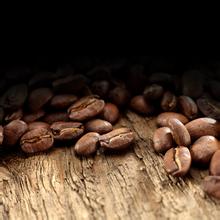
Coffee grown in South America by "coffee drinkers" in Heilongjiang Province is sold back to Harbin to create Chinese coffee products.
It is reported that after the coffee grown in South America is sold back to Harbin, Heilongjiang coffee can be stored in the comprehensive bonded area. Russia, Japan, South Korea and other neighboring countries all have the tradition of drinking coffee, but they do not grow coffee. Harbin will carry out coffee export and re-export trade to these countries to promote the in-depth development of China's coffee industry.

The annual market growth rate of China's coffee industry is more than 10%.
Tea, coffee and cocoa are called the three major drinks in the world. In recent years, with the improvement of domestic economic level and the change of people's way of life and work, the market prospect of coffee is getting better and better. Coffee beans play a very important role in both private and business occasions.

Description of Flavor of Yunnan small-grain Coffee Bean Flavor introduction to Grinding scale of varieties
Yunnan small-grain coffee beans Huaguoshan flavor description, characteristics of varieties grinding scale introduced that coffee cultivation in China is concentrated in Yunnan Province and Hainan Province. Yunnan has a large output, with an annual output of about 26000 tons in recent years, accounting for 90% of the national output. It is said that Yunnan coffee came from the French 70 or 80 years ago. The main variety is Arabica Arabica, the so-called small seed coffee, commonly known as Yun in China.

A brief introduction to the treatment method of grinding degree and baking degree of medium-grain Vietnamese boutique coffee beans
In addition, there are many enterprises with inadequate equipment, which only rely on a few stand-alone machines for processing, and purchase newly processed coffee from farmers to ensure export standards. The coffee purchased from the private sector is mainly handled by each farmer through the cement yard or soil yard. Farmers in many places use small grinders to grind dried coffee fruits into coffee kernels and sell them to coffee buyers. This kind of processing

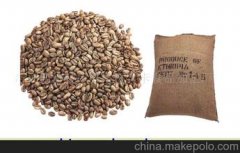
Coffee Originated from Ethiopia or Arabia Brand Features Flavor Taste Introduction
Ethiopian coffee is still divided into two categories: wild coffee and artificial coffee. Wild to the southwest of the season horse area dominated by low harvest. The yield of coffee beans per hectare on artificial plantations is 500600 kg. According to statistics, Ethiopia now has more than 400,000 hectares of coffee gardens, mainly distributed in the season.
A brief introduction to the Market Price of Vietnamese Fine Coffee Bean varieties
Coffee cultivation in Vietnam covers an area of about 500000 hectares, of which 10% are owned by state-owned enterprises and farms, and 85% by farmers and landowners. The scale of the manor is small, usually 2-5 hectares, and the large manor is about 30-50 hectares, but the number is small. Vietnamese coffee ranks second in all agricultural products exported from Vietnam, second only to rice. Every year, about 300000 farmers are engaged in coffee cultivation, with a labor force of 600000.

A brief introduction to the Market Price of High-quality Coffee Bean varieties in Vietnam
Two years ago, I read a survey report that Vietnam has overtaken Colombia in coffee bean production, ranking second in the world after Brazil. But it is planted with Robusta trees, and there is still a big gap in the quality of coffee beans compared with countries such as Colombia and Brazil. Vietnam's coffee production is growing. Among Vietnam's new export products, tea ranks first and coffee ranks first.

A brief introduction to the planting market price of fragrant and mellow Vietnamese boutique coffee beans
G7 coffee is one of the most famous coffee in Vietnam. Each coffee bean is selected from the best coffee area in the Vietnamese plateau and baked with special cream. The creamy, mellow Wiener three-in-one instant coffee is produced and exported by Vietnam Bian Heweina Co., Ltd., the market share of Vina coffee in Vietnam has been maintained at more than 45%, in the leading position. At present, Wiener has been connected.

A brief introduction to the description of flavor, taste and aroma characteristics of Vietnamese boutique coffee beans
Vietnam's geographical location is very favorable for coffee cultivation. Southern Vietnam has a hot and humid tropical climate, which is suitable for growing ROBUSTA coffee, while the north is suitable for growing ARABICA coffee. Coffee production in Vietnam has the following characteristics: (1) because there is no effective way to deal with fallen leaves, medium-grain coffee was selected as the main variety in the early 1980s. (2) take planting technology as